
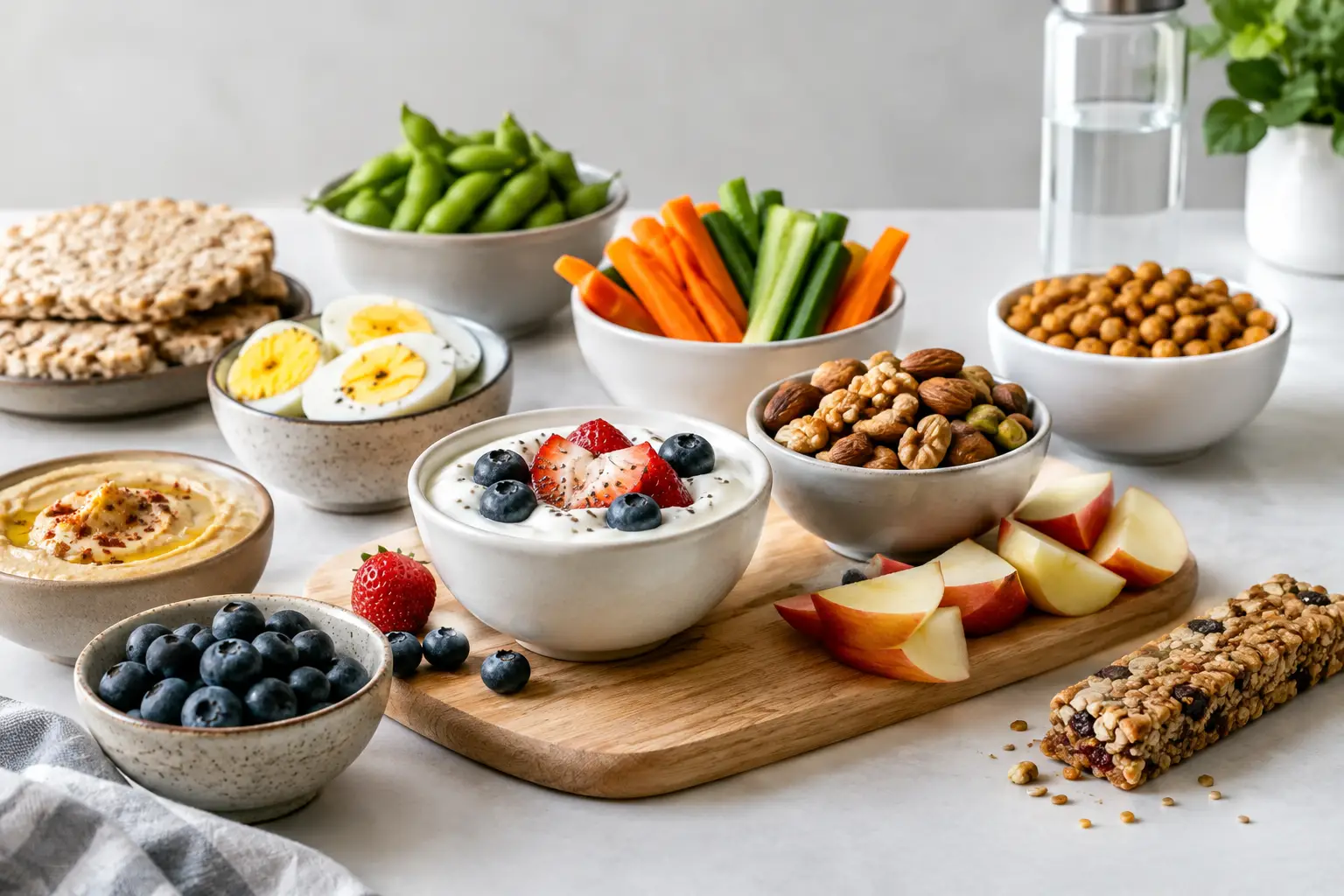
That 3pm hunger can make a carefully planned calorie target feel much harder than it should. The best snacks for calorie deficit goals are not simply the foods with the fewest calories. They are the foods that fit your calorie budget while helping you feel satisfied enough to make your next meal choice with a clear head.
A useful snack can prevent the familiar pattern of arriving at dinner overly hungry, eating quickly, and feeling as though your plan has gone off track. The goal is not to eliminate snacks. It is to choose them deliberately, with portions that support your daily energy needs and the progress you want to make.
What makes a snack work in a calorie deficit?
A snack earns its place when it offers more satisfaction than its calorie total suggests. Protein helps many people stay fuller between meals, while fibre and food volume can make a modest portion feel more substantial. Foods with some crunch, texture or a naturally slow eating pace can also be more satisfying than something you finish in two bites.
There is no single calorie limit for a snack. A person with a larger calorie target, a long gap between meals or a training session ahead may need 200 to 300 calories. Someone who just needs to take the edge off hunger may be better served by 100 to 150 calories. What matters is how the snack fits into the full day, not whether it meets an arbitrary number.
It also helps to be realistic about convenience. A bowl of yoghurt may be nutritionally useful, but it will not help much if your working day always leaves you relying on vending machines. Keep a few options that are easy to store, carry and portion, then reserve more prepared choices for home.
12 best snacks for a calorie deficit
1. Greek yoghurt with berries
Plain Greek yoghurt provides a filling protein base, and berries add sweetness, fibre and volume for relatively few calories. A small bowl is especially useful when you want something that feels like a proper dessert rather than a restrictive substitute. Choose plain yoghurt where possible, then add fruit or cinnamon yourself to keep added sugars in check.
2. Apple slices with measured peanut butter
Apples are crisp, portable and naturally filling, while peanut butter adds richness that can make the snack more satisfying. The key word is measured. Nut butters are nutritious but energy-dense, so a thin spread or a level tablespoon is very different from eating directly from the jar.
3. Cottage cheese and cherry tomatoes
Cottage cheese is a practical high-protein option that needs very little preparation. Pairing it with cherry tomatoes, cucumber or pepper strips adds freshness and a larger portion. If you find the flavour too plain, black pepper, dried herbs or a little chilli seasoning can make it more enjoyable without meaningfully changing the calorie total.
4. A boiled egg with fruit
An egg offers protein and fat in a compact serving, while a piece of fruit gives the snack more volume and a sweeter finish. This combination works well for people who do not feel satisfied by fruit alone. Prepare a few eggs in advance, but store them safely in the fridge and take only what you will eat that day.
5. Air-popped popcorn
Popcorn can be a strong choice when your main need is a generous-looking portion and something crunchy. Air-popped or lightly seasoned popcorn is usually easier to fit into a deficit than butter-heavy cinema-style popcorn or large bags coated in sugar. Check the packet serving size if buying ready-made versions, as bag sizes can be misleading.
6. Edamame beans
Edamame offers a useful combination of protein and fibre, and the pods naturally slow down eating. They can be bought frozen and microwaved in minutes, making them more convenient than many people expect. A little salt, chilli flakes or garlic seasoning can turn them into a snack you genuinely look forward to.
7. Carrot sticks with hummus
Crunchy vegetables make hummus go further and add texture without adding many calories. Hummus is a good example of a food that can support a calorie deficit but still benefits from a sensible serving. Spoon a portion into a bowl rather than taking the tub to the sofa, where it is easier to keep dipping without noticing.
8. A protein shake with a piece of fruit
A protein shake is not automatically better than food, but it can be practical after exercise or when time is short. Having it with a banana, orange or apple gives more chewing and fibre than a shake alone. If you are already meeting your protein needs comfortably, a whole-food snack may be more satisfying on ordinary rest days.
9. Tuna on rye crispbreads
Tuna provides protein, and rye crispbreads add a crisp, savoury base without becoming a large meal. Mix tuna with yoghurt, mustard, lemon juice or herbs instead of a large amount of mayonnaise. This is a particularly helpful option if sweet snacks leave you searching for more food soon afterwards.
10. Roasted chickpeas
Roasted chickpeas are crunchy, shelf-stable and more substantial than many snack crisps. They contain fibre and some protein, though they are still easy to overeat straight from a large packet. Divide them into a small bowl or reusable container before you begin, especially if you tend to snack while watching television.
11. A small portion of nuts with a satsuma
Nuts provide satisfying texture and healthy fats, but portion size matters more here than with almost any other snack. A small closed handful paired with a satsuma or other easy-to-peel fruit can feel far more complete than nuts alone. Pre-portion them rather than relying on willpower around a family-sized bag.
12. Skyr or yoghurt with oats and cinnamon
Skyr or thick yoghurt topped with a small spoonful of oats can bridge the gap between a snack and a mini meal. The oats add chewiness, while cinnamon brings a dessert-like flavour without needing syrup or confectionery toppings. This is a useful evening option if you often feel hungry after dinner but do not need a second full meal.
Match your snack to the reason you are hungry
The best choice changes with the situation. If lunch was several hours ago and dinner is still far away, choose a more substantial snack with protein and fibre, such as cottage cheese with vegetables or tuna on crispbreads. If you only want a sweet taste after a meal, yoghurt with berries may meet that need without turning into a second dinner.
Training also changes the picture. Before a workout, foods that are lower in fat and easier to digest, such as fruit, yoghurt or a small protein shake, may feel more comfortable. After training, a protein-containing snack can be convenient if your next meal is not soon. You do not need to force a post-workout snack if a balanced meal is already planned within the next couple of hours.
Pay attention to hunger patterns rather than judging them. Consistent, intense hunger may mean your calorie deficit is too aggressive, your meals are too small, or you are leaving too long between them. A sustainable deficit should require planning, not constant white-knuckling.
Make portions easier to manage
Many nutritious snacks become less helpful when eaten without a boundary. Put the serving in a bowl, plate or container first. This is not about making food rules stricter. It is a simple way to see what you are eating and decide whether it actually satisfied you.
Use your daily calorie target as a framework, then leave room for the foods you enjoy. If a favourite snack is higher in calories, you do not have to ban it. Have a measured portion, pair it with fruit or a protein food if that helps satisfaction, and account for it across the day. Consistency is more valuable than choosing the lowest-calorie option for a few days and then feeling deprived.
A snack should make your calorie deficit easier to live with, not feel like a test of discipline. Build a short list of options you enjoy, keep the ingredients visible and convenient, and adjust the portion to your own hunger, activity and calorie target. That is how small choices become habits you can maintain with confidence.